



Agros

CULTIVATING HOPE:
Our Climate Smart practices are healing the earth and helping families rise out of poverty. Learn how AGROS and Rick Steves’ Europe’s Climate Smart Commitment improves the environment and secures farmers’ livelihoods.

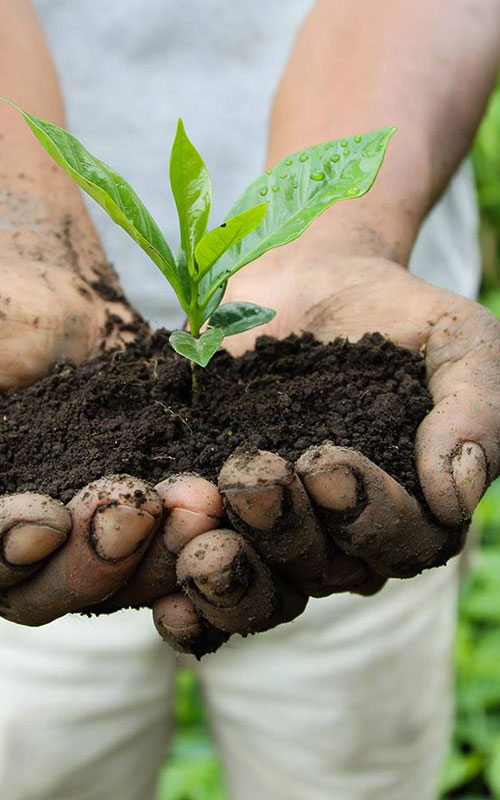
At Agros, we believe caring for the land is inseparable from caring for people. Rooted in faith and guided by the knowledge of farming families, we embrace our responsibility as stewards of God’s creation. Through our Climate Smart Commitment, we equip communities to restore their land, strengthen their resilience, and build a future defined by dignity, ownership, and lasting prosperity.

AGROS CLIMATE SMART AGRICULTURE PRINCIPLES

ADAPTATION

Increasing farmer’s resilience and adaptive capacity.

MITIGATION

Reducing agriculture’s carbon footprint and making agriculture part of the solution.

PRODUCTIVITY

Ensuring farmer’s livelihood are not threatened by mitigation and adaptation efforts: practices must benefit farming families.

Here’s how Agros is making a difference

Adapting the
Production System

Farming families are strengthening their resilience to climate change by applying practices like strategic crop rotation, reducing pests and disease cycles while building healthier ecosystems that sustain their land and livelihoods.

Reducing the
Carbon Footprint

Through terraces, reforestation, water protection, and the use of biofactories for natural inputs, families are restoring their environment while reducing reliance on chemical fertilizers and lowering emissions.

03

Increasing Productivity
& Well-being

These practices are designed to help families thrive, improving yields, income, and long-term stability. For example, Agros farmers are cultivating grafted coffee plants that combine drought-resistant roots with high-quality varieties, ensuring resilience and consistent production.

EXAMPLE OF THE CORRELATION OF
Climate Smart Agriculture principles with AGROS model:

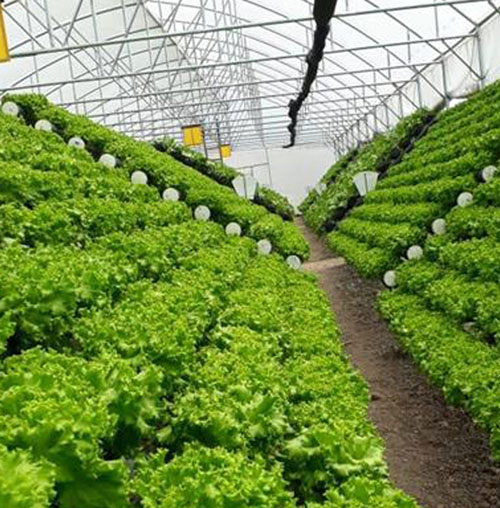
HYDROPONIC PRODUCTION

Integration of technology, increase of productivity, and proper water resource management.

  • Hydroponic modules save 2.5 million liters of water per year compared to traditional irrigation systems. Our three hydroponic facilities in Nicaragua produce 150,000 heads of lettuce per year in 1,000 square meters.
  • Traditional outdoor farming would require 45,000 square meters (12 acres) to grow the same amount.
  • Product quality generates higher income for producers.

FROM CONCEPT TO PRACTICE

1

Climate Smart Curricula, Practices, and Training

To integrate these three climate-smart principles, Agros embarked on a comprehensive learning journey. Initially, to trained farmers and staff in Best Agricultural Practices (BAP). This ongoing process evolves continuously within each area of impact of Agros programs in Central America.

producing families trained.
+ 0

2

CLIMATE SMART AGRIBUSINESS MODULES

Carousel

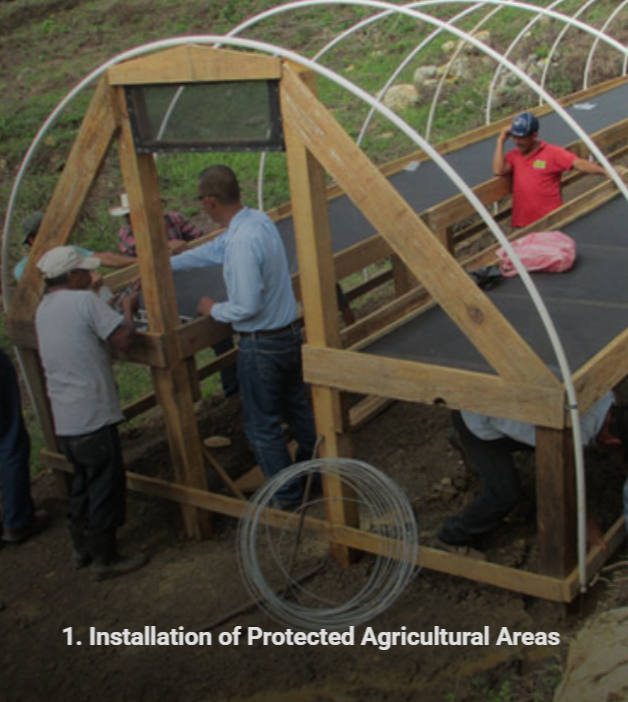
1.Installation of Protected Agricultural Areas

These areas enable year-round crop production, beyond seasonal limitations. They provide better pest and disease control and facilitate the responsible use of water resources.

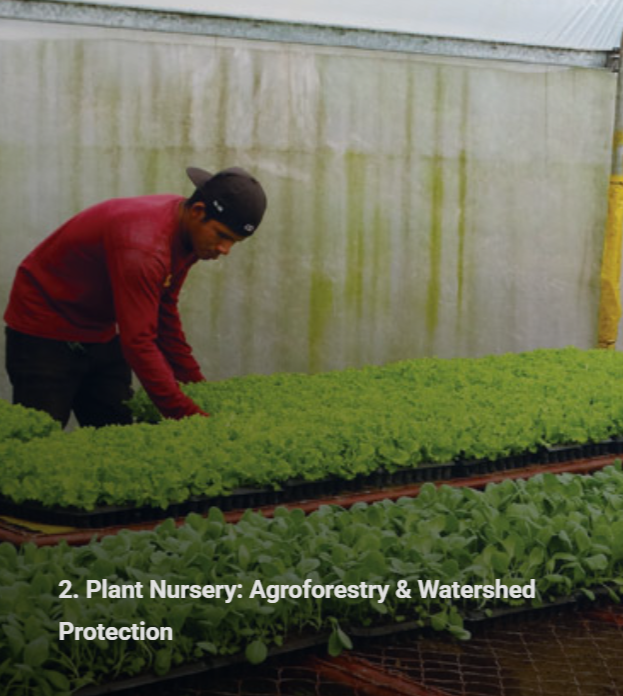
2.Plant Nursery: Agroforestry & Watershed Protection

By introducing economically valuable species, such as fruit trees, the producers are self-encouraged to protect them. These trees capture carbon and release oxygen, acting as regulator of the temperature. The nursery, producing reforestation species, also safeguards water sources by enclosing areas with recharge zones.

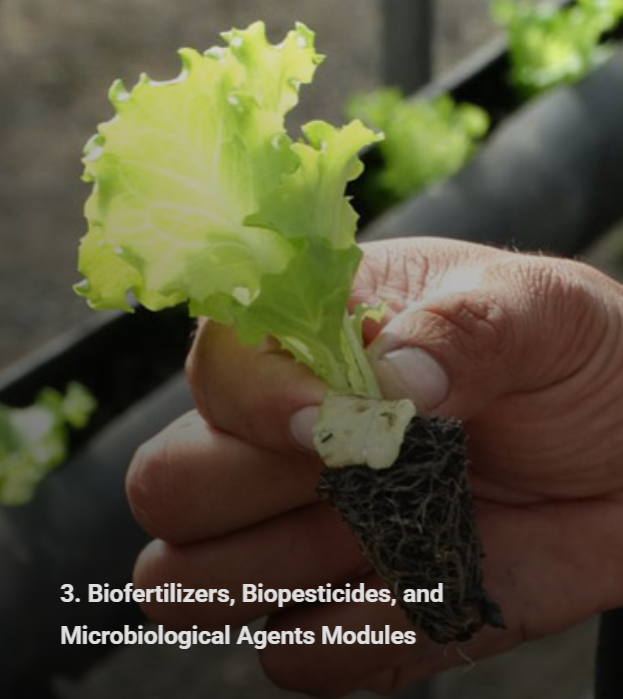
3.Biofertilizers, Biopesticides, and Microbiological Agents Modules

Biofactories transform local resources into natural fertilizers, biopesticides, and microbiological inputs—producing over 220 tons of biofertilizers each year. By harvesting microorganisms from untouched soils and fermenting them with natural ingredients, farming families create 100% organic solutions that enrich soils, strengthen crops, and reduce reliance on chemical inputs.

Protected agricultural area
Plant nursery
Biofertilizers

3

BEYOND THE FIELDS
Cultivating Community Well-being through Climate-Smart Principles.

Investment in training modules, mesh houses, and biofactories transcends the concept of climate-smart agriculture, into building climate-smart villages where residents adopt the following processes:

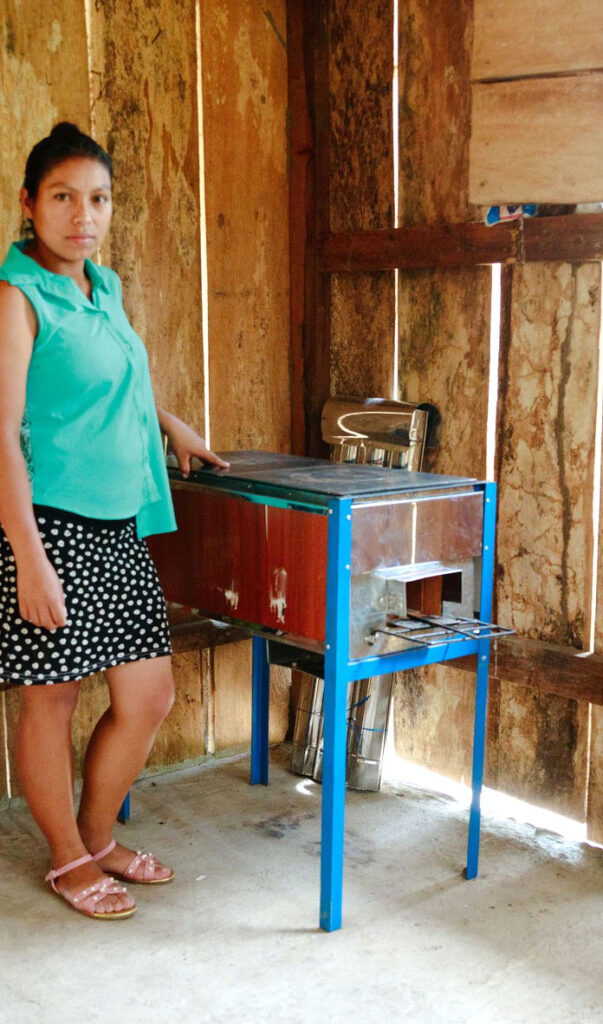
The eco-stoves reduces household firewood consumption by 70%. The system is supported by plantations aimed at producing the firewood each family needs for cooking, preventing environmental depredation.

Before: require large amounts of firewood, poor ventilation exposing households to highly toxic, dense smoke.

Now: The fire’s isolation in combination with better air flow, makes the stove more efficient, requiring a smaller fire and less wood to thoroughly cook food.

The rational use of the resource, together with the protection of water sources, guarantees clean and safe water for the families and abundant water for irrigation.

Before:  the water did not meet ideal hygiene conditions, which had adverse effects on health, and the planting periods and yields were subject to the behavior of the rainy season.

Now: the community has water resources year-round, which supports a full life in an agricultural community

Families have flushing toilets connected to septic tanks, which ensures proper handling of excreta.

Before: during the rainy season, common pits would turn into flood flows that contaminated the community and increased the risk of unsanitary conditions.

Now: By promoting hygienic practices, diseases are avoided.

Recycling processes to ensure that chemical residues do not reach rivers and other water sources, preventing health hazards.

Before: Villagers used containers contaminated with chemical residues as household utensils or for agricultural production.

Now: Disposal bins are available for proper chemical waste disposal.

The Agros Aldeas counts with garbage bins in common areas to provide the community with a waste disposal system.

Before: Villagers would burn the garbage in open fields, exposing people to pollutant particles that endanger their health and affect the environment of the community.

Now: Families properly dispose of their waste in bins, which the municipal cleaning system transports to landfill areas.

ACHIEVEMENTS OF AGROS
CLIMATE SMART COMMITMENT

Reduction in the use of chemicals

Reduction in fossil fertilizers use:
40%
Reduction in cost of fertilizer application:
51%
Reduction in pesticides use:
44%

Farmers Certifications

  • Rain Forest Alliance.
  • Starbucks CAFE Practices.
  • Best Agricultural and Manufacturing Practices.

Increase in profitability

Increase in crop yields:
18-32%
(depending on the crop)

The application of the CLIMATE SMART PRINCIPLES is not carried out in a controlled lab plot or pilot project but is implemented in a scalable model with all program producers.

Water Management

  • Eight reforested and protected watersheds.
  • 146 acres of drip irrigation systems installed.
  • 80,882,000 liters of water saved (equivalent to 32.35 Olympic-size swimming pools).
  • 19,992,000 liters of water treated and filtered back into the ground and ecosystem.

Waste Management

  • Three tons per year collected from Climate Smart Villages.
  • Plastic waste management.
  • No garbage burning.

Energy Efficiency

  • Over 700,000 plants produced, 68,805 trees planted.
  • 70% of fuel wood needs from renewable sources.
  • 90% in the reduction of kitchen´s smoke emissions.
  • 4,000 kg per family of wood saved per year.
  • 588 trees per year saved from burning.

REDUCING THE CARBON FOOTPRINT

Through their daily work, Agros farming families are restoring soil health, increasing carbon capture, and reducing reliance on chemical inputs, lowering emissions while strengthening the productivity and resilience of their land. 

Early results from carbon capture measurements using the Cool Farm Tool (CFT) demonstrate the power of these efforts: in Nicaragua, farming families are capturing 208.87 tons of CO₂ through reforested coffee areas, bio-inputs, and protected vegetable production zones, offsetting the equivalent of 59 round-trip flights from Seattle to Rome. 

Be Part of the Solution

When you give, you equip farming families to restore their land, strengthen their resilience, and build a future defined by dignity and opportunity.

Together, this is what your support makes possible:

  • 97% of families rise above poverty
  • Families build an average net worth of $25,000.
  • Over 8,000 acres of land are now owned by farming families, with most having fully repaid their loans
  • More than 28,000 individuals are living with dignified housing, access to healthcare, sanitation, and education

Your investment fuels more than climate-smart farming. It helps families grow thriving businesses, care for the land, and create generational change.

Here’s How You Can Help

Give today to help families overcome climate challenges, restore their land, and build a future that lasts—for themselves, their communities, and our shared planet.